










TL;DR
- Pricing: Nextiva wins. It opens at $23/user/mo ($15 billed yearly) against RingCentral's $30 ($20 yearly). Watch the fine print though: both bury their best features in $75 tiers.
- Ease of use: Nextiva wins (narrowly). Its admin panel is cleaner and it scores 4.5 on G2 versus RingCentral's 4.2. RingCentral is powerful but reviewers keep calling the backend overwhelming.
- Integrations: RingCentral wins. Over 500 native integrations to Nextiva's short list. The catch: RingCentral's own HubSpot integration is rated just 2.5/5, so breadth beats depth here.
- AI features: RingCentral wins. Most of its AI sits in the base Core plan. Nextiva gates real-time transcription, summaries and emotion scoring behind its $75 Power Suite CX tier.
- Multi-channel: RingCentral wins (just). Both cover voice, text, video, WhatsApp and Instagram. RingCentral's fax and video depth give it the edge.
- Both are legacy giants, and a new class is catching up. Nextiva (2008) and RingCentral (1999) were built before AI and mobile reset expectations. AI-first phone systems like Allo now bundle the AI receptionist, transcription and CRM sync that these two charge extra for, starting at $18/mo.
Introduction
Watch two heavyweights play catch and you learn a lot from where the ball actually goes. Nextiva throws affordable and simple. RingCentral lobs back we integrate with everything. Nextiva answers cleaner admin. RingCentral counters global coverage and 500+ apps. The ball never really drops, which is exactly why choosing between them is hard.
I've spent years inside VoIP tools, and I've used both of these in the past. On paper they look like twins: US-focused, all-in-one, reliable, adding AI as fast as their roadmaps allow. In practice, they win on different dimensions, and the right answer depends entirely on what you value.
This article settles the game of catch on five fronts: pricing, ease of use, integrations, AI features, and everything they offer beyond voice. I'll back each call with real pricing, G2 and Trustpilot data, and app store reviews for the parts that only show up once you're a daily user. By the end, you'll know which giant fits your team, and whether either one is still the right era of tool for you.
Comparison table
Our methodology
We build phone systems for a living, so we test the competition the way our own users would. For this comparison, I set up both Nextiva and RingCentral in the past, placed real calls, wired them to a CRM, and poked at the admin panels until something broke. That firsthand time is where opinions like Nextiva's admin is cleaner come from; you only feel that after you've configured call routing in both.
But one operator's experience is a sample size of one. So I complemented it with the data. We read hundreds of reviews across G2, Trustpilot, and the Apple and Google app stores, plus the HubSpot and Pipedrive marketplaces for the integration verdicts. Where a claim rests on a review, I link it so you can check my work. Science over vibes: when firsthand testing and the review data disagreed, I flagged it rather than smoothing it over.
What online reviews say
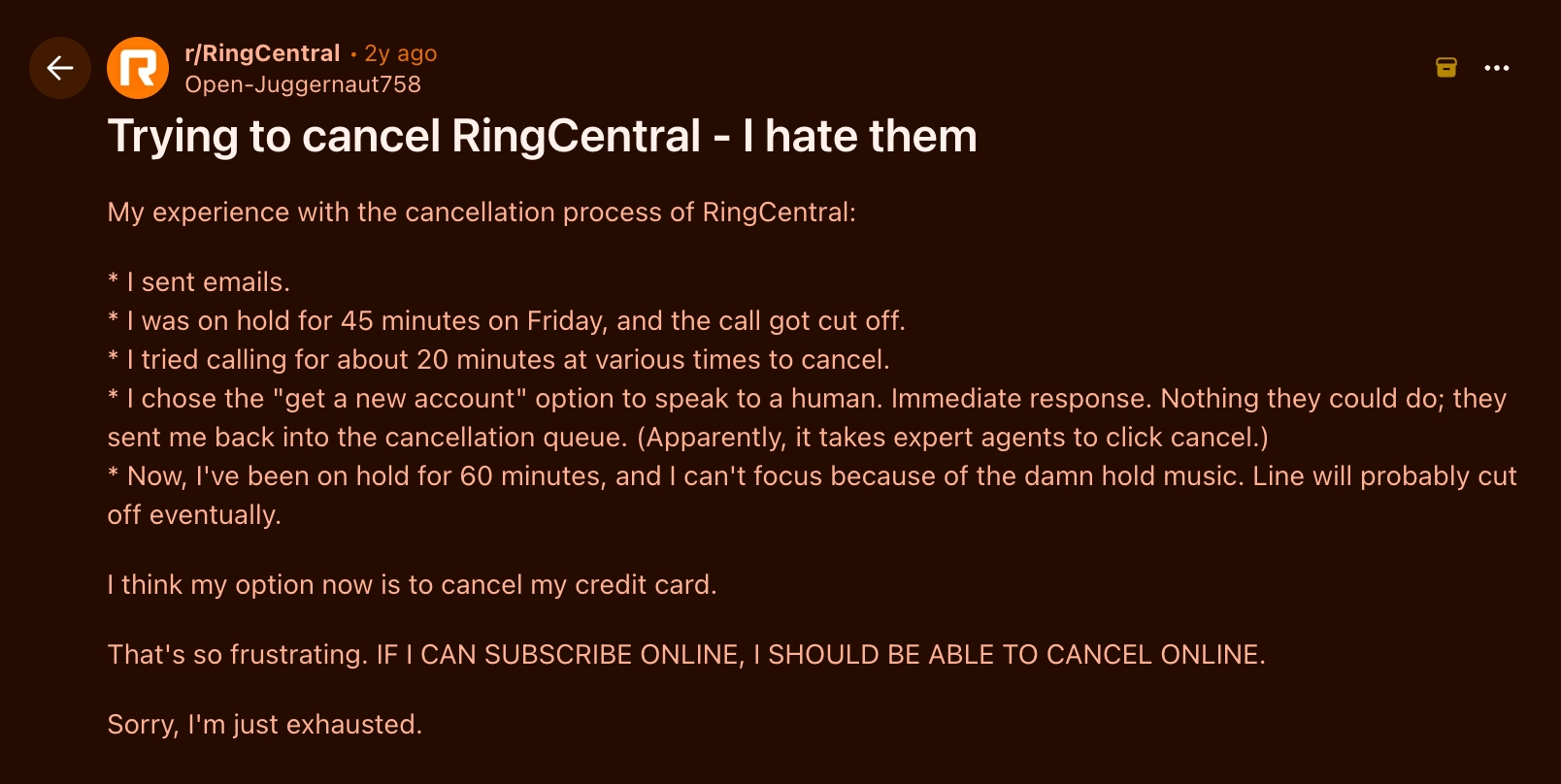
Start with the headline scores and a pattern jumps out. On G2, Nextiva sits at 4.5/5 across 3,567 reviews; RingCentral at 4.2/5 across 1,402. Nextiva looks like the more-loved product, and its Trustpilot score of 4.6 (8,541 reviews) dwarfs RingCentral's 1.8 (1,934 reviews). That Trustpilot gap is the single loudest signal in the data: RingCentral customers vent about lock-in contracts and a cancellation process one Reddit user says took a full hour.
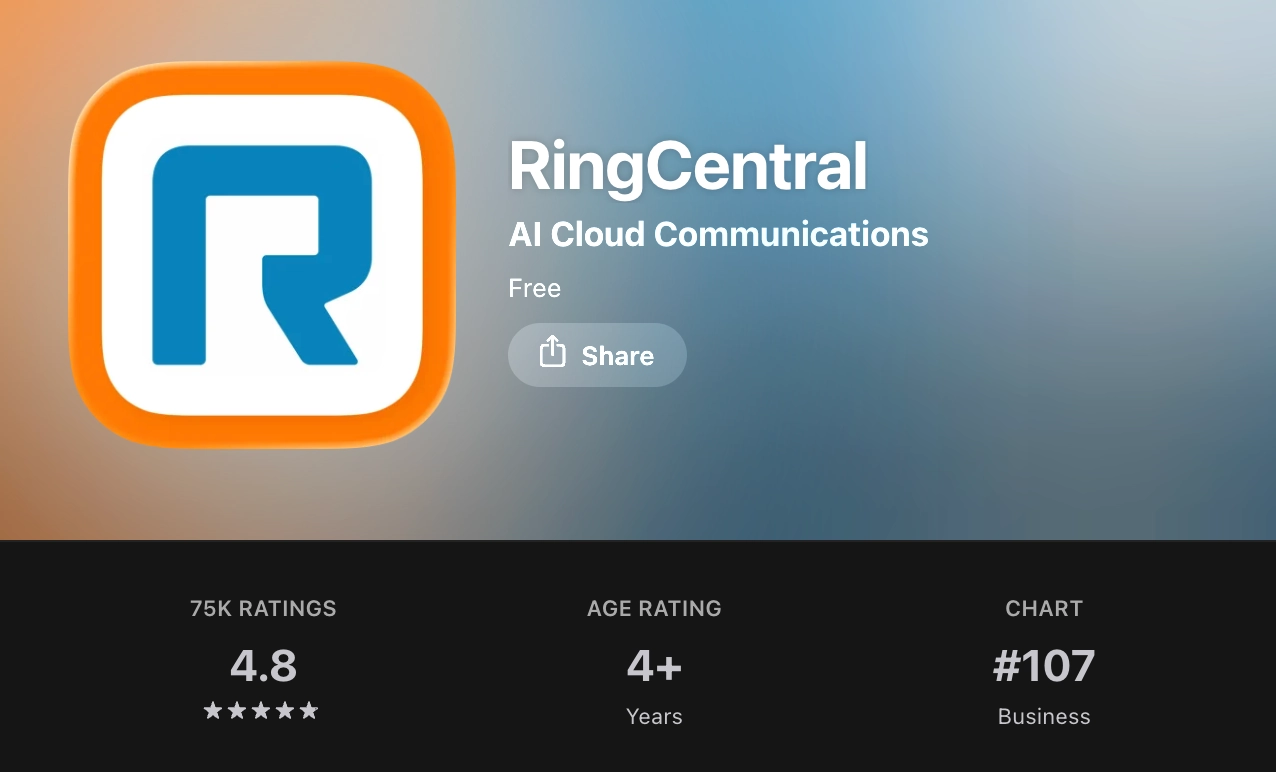
Now flip to the phones, because a business phone system lives or dies on mobile. Here the ranking inverts. RingCentral's app is rated 4.8/5 on the App Store (74,000 reviews) and 4.7 on Play (33,000), an enormous, consistent base. Nextiva's apps sit at 4.1 on both stores, with reviewers reporting calls that will not ring when out of the office and occasional random logouts. If your team works primarily from their pockets, RingCentral's mobile track record is the stronger bet.
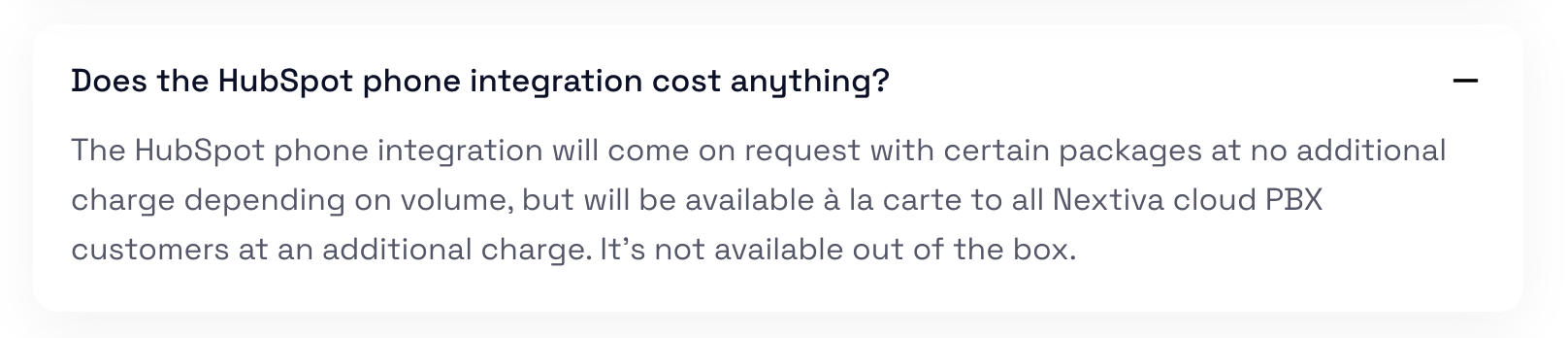
Integrations tell a third story, and it's unflattering to both. The marketplace ratings are where the 500+ integrations claim meets reality: RingCentral's HubSpot connector scores just 2.5/5, and its Pipedrive app 3.5/5 (40 reviews). Nextiva doesn't publish enough marketplace reviews to score cleanly, but its own docs admit the HubSpot integration isn't available out of the box and can add cost. The takeaway: neither giant has a CRM integration that users rave about, which matters if your reps live inside HubSpot or Pipedrive all day.
Pricing
Winner: Nextiva, on headline price. But read the tiers, because cheapest flips depending on what you need.
At the entry door, Nextiva is cheaper. Its Core plan is $23/user/mo ($15 billed yearly) against RingCentral's RingEX Core at $30/user/mo ($20 yearly). For a small team that just needs reliable calling, SMS and video, Nextiva saves you roughly a third on the base subscription.
Then the tiers start playing tricks. Nextiva's mid-plan, Engage, jumps to $50/user/mo, and the AI-heavy Power Suite CX lands at $75. RingCentral climbs more gently: Advanced at $35 and Ultra at $45. So the moment you want RingCentral's top business tier, it's actually cheaper than Nextiva's ($45 vs $75). The cheaper brand at the entrance becomes the pricier one at the top of the staircase.
The feature you're chasing decides the real winner. Want AI transcription and summaries? Nextiva locks them behind that $75 Power Suite CX plan, while RingCentral includes most AI in its base Core plan; advantage RingCentral. Want a power dialer? Neither includes one in their phone plans. RingCentral's lives in RingCX, its separate contact-center product starting at $75/user/mo, and Nextiva has no real power dialer at all.
Both also carry the classic legacy tax: add-ons. RingCentral's AI Receptionist starts at $49/mo on top of your seats, and extra numbers run $4.99/mo each. Nextiva's AI Receptionist is billed $99/mo per 100 interactions, then $0.99 each after. G2 reviewers feel it, calling out billing that can be confusing for Nextiva and add-ons that increase the bill a lot for RingCentral.
Here's how a Nextiva user described his situation on G2:
Some features that should be available are not without paying extra. Those features are not clearly described as not being included so it creates confusion in creating visual call flows that will not implement.
Source: G2
My honest read: if you want a straightforward calling plan and nothing fancy, Nextiva is the cheaper, cleaner choice. If AI matters and you don't want to leap to a $75 tier to get it, RingCentral's base plan is the better value. Neither is what I'd call transparent, and that's the opening a no-add-on, AI-included tool is built to exploit.
Ease of use
Winner: Nextiva, but it's a photo finish.
Here's the funny thing about these two: their users say almost the same nice thing. Easy-to-use, intuitive interface shows up 18 times in our sample of Nextiva G2 reviews, and easy to use with simple setup shows up 15 times in RingCentral's. Once you're just making and taking calls, both feel fine. The difference lives in the admin panel, where the person configuring the system actually suffers.
That's where Nextiva pulls ahead. When I set it up, the admin felt clean and the desktop app was easy to find and worked well. The G2 data backs the daily-driver experience, and Nextiva's overall 4.5/5 sits above RingCentral's 4.2. RingCentral, by contrast, is 25 years of features stacked on top of each other, and it shows. Reviewers call the backend overwhelming and hard to navigate without help from support (9 mentions of complex admin setup).
Here's how a RingCentral user put it:
I think the admin setup is a bit complex like admin can feel a little bit overwhelmed while setting up the initial configuration and also internet dependency except that things are good .
Source: G2
Neither is spotless, and I won't pretend otherwise. Nextiva still draws complaints about confusing settings and an outdated admin panel (6 mentions), plus a setup learning curve. RingCentral's onboarding actually earns praise; it's the ongoing administration that frustrates people. So the honest read: if a non-technical owner will run the system day to day, Nextiva is the gentler tool. If you have an ops person who enjoys depth, RingCentral's complexity buys you power.
Integrations
Winner: RingCentral, on raw breadth. Just temper your expectations on quality.
This one isn't close on the numbers. RingCentral lists over 500 native integrations; Nextiva lists roughly nine (Microsoft Teams, HubSpot, Zendesk, Outlook, Bullhorn, Act!, Sugar CRM and a couple more). If your stack is unusual, RingCentral almost certainly connects to it, and Nextiva probably doesn't. For breadth alone, RingCentral takes the point.
But breadth and quality aren't the same thing, and the marketplace ratings are humbling for both. RingCentral's own HubSpot integration scores just 2.5/5, and its Pipedrive app 3.5/5 across 40 reviews. So the connector exists, yet users aren't thrilled with how it works.
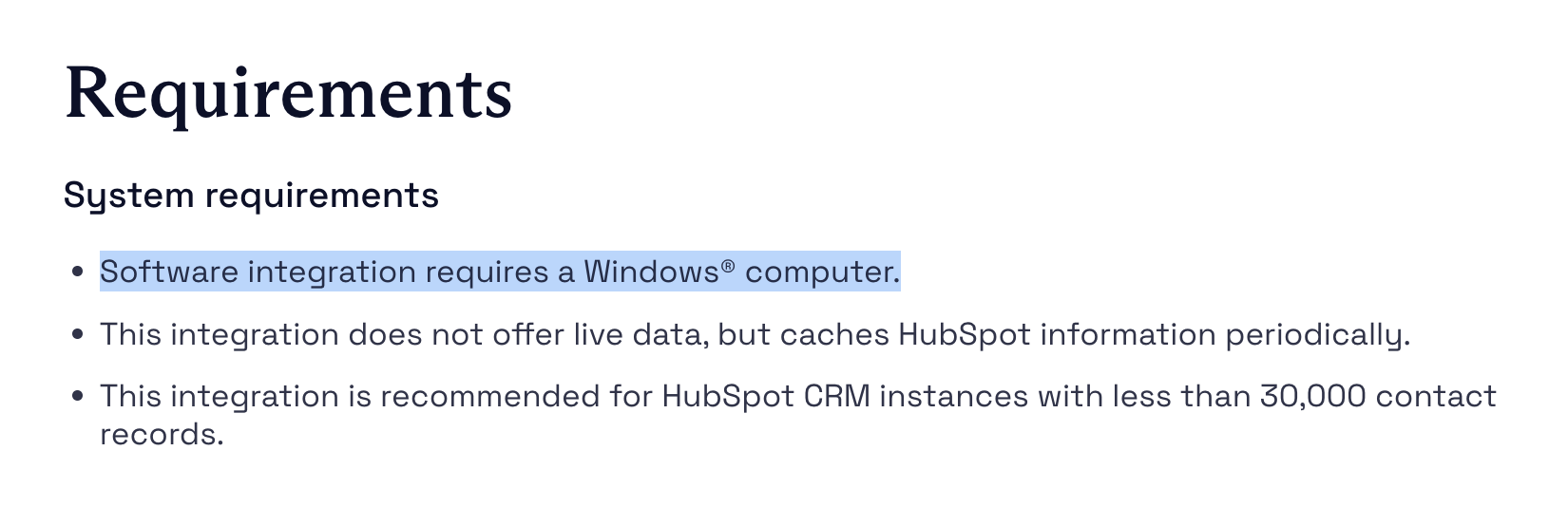
Nextiva's real problem is friction, not just count. Its HubSpot integration isn't available out of the box, can add cost, and (oddly) requires a Windows computer. On top of that, Nextiva's entry Core plan doesn't include CRM integrations at all; you climb to a pricier tier to unlock them. RingCentral bundles CRM integrations from its Advanced plan.
My take from having wired both to a CRM: RingCentral wins because it will connect to your tools, full stop. Neither, though, delivers the deep two-way sync (logging calls, pushing transcripts and recordings automatically) that reps actually want. That gap is exactly where a modern integration, one that syncs the call and its transcript into HubSpot without a workaround, quietly wins the day.
AI features
Winner: RingCentral, because it hands you AI without a toll booth at the entrance.
Both giants are racing to bolt AI onto legacy platforms, and both have a respectable feature list. Nextiva offers voicemail and real-time transcription, call summaries, emotion scoring, an AI IVR, and an AI receptionist called XBert. RingCentral counters with its AVA assistant, AI call summaries, an AI email drafter, an AI receptionist, and SMS translation. On paper, it's a fair trade.
Price is where they split. Nextiva gates the good stuff: real-time transcription, summaries and emotion scoring all require the Power Suite CX plan at $75/user/mo. RingCentral includes most of its AI in the base Core plan ($30/user/mo). If AI is a reason you're switching, paying $30 instead of $75 to unlock it is a meaningful gap, and RingCentral's own reviewers rank AI note-taking and summaries among their favorite features (11 mentions).
The AI receptionist is a wash, and an expensive one on both sides. Nextiva bills its receptionist at $99/mo per 100 interactions, then $0.99 each after. RingCentral's starts at $59/mo for 100 minutes as an add-on. Neither includes it, and both cap language support tightly (Nextiva covers four languages; RingCentral's receptionist only English, French and Spanish).
Step back and the pattern is clear: these are AI features priced like add-ons, because AI wasn't in the original blueprint. That's the structural opening for AI-first systems. When a phone system is built around AI from day one, transcription, summaries and an AI receptionist come included on every plan rather than metered by the interaction.
FYI, Allo includes all the AI features in all our plans without any extra charge.
Multi-channel communications (beyond voice)
Winner: RingCentral, by a nose, on depth rather than range.
The channel lists look like mirror images. Nextiva does voice, SMS, video conferencing, WhatsApp and Instagram. RingCentral does voice, SMS, video conferencing, WhatsApp and Instagram. If your requirement is "we need to reach customers on more than the phone", either one clears the bar comfortably.
RingCentral edges it on how far each channel goes. Its fax and video tools are genuine standouts (fax still matters in healthcare, legal and finance), and you can run multiple phone and fax lines across multiple office locations. Reviewers single out the all-in-one platform unifying calls, texts, video and messaging. For a business that wants one dashboard covering every channel deeply, RingCentral has the sturdier spread.
Nextiva isn't far behind, and it adds a customer-facing live chat plus team-chat collaboration that suit support desks well. Where it loses ground is reach: Nextiva works in the US and only parts of Canada, while RingCentral supports numbers in 100 countries. If any of your channels need to cross a border, that coverage difference decides it.
The broader point holds for both: they treat channels as modules you assemble and pay for, not as one unified inbox. A newer generation folds voice, SMS and AI into a single view by default, which is where the extra channels stop feeling like extra bills.
Conclusion
The game of catch never really ends, but the ball tells you who should pick which glove.
- Choose Nextiva if you're a US-based SMB that wants the cleaner admin, the gentler learning curve, and the cheaper entry price ($23/user/mo). Its 4.5 G2 and 4.6 Trustpilot scores reflect a product people genuinely like living with.
- Choose RingCentral if you need breadth: 500+ integrations, 100-country coverage, deeper fax and video, and AI included in the base plan. Just go in clear-eyed about the overwhelming admin, the pricey add-ons, and a cancellation process users describe as painful.
- Watch the mobile gap. RingCentral's apps (4.8 and 4.7, with tens of thousands of reviews) badly outclass Nextiva's (4.1 and 4.1). For a field or remote team, that matters more than any spec sheet.
- Remember the era both were built in. Nextiva (2008) and RingCentral (1999) predate the AI-and-mobile expectations they're now scrambling to meet. An AI-first system like Allo bundles the receptionist, transcription and CRM sync these two meter and gate, starting at $18/mo. If you're choosing today, it's worth a look before you sign a long contract.
FAQ
[[faq-blog]]
Is RingCentral better than Nextiva?
It depends on what you weight. RingCentral is better for integrations (500+ apps), global coverage (100 countries), mobile apps, and AI included in the base plan. Nextiva is better for price, ease of use, and overall customer satisfaction (4.5 vs 4.2 on G2, 4.6 vs 1.8 on Trustpilot). For a typical US-based small business, Nextiva is the safer pick; for a larger, tool-heavy team, RingCentral wins.
Which is cheaper: Nextiva or RingCentral?
Nextiva, at the entry level. Its Core plan starts at $23/user/mo ($15 billed annually) versus RingCentral's $30/user/mo ($20 annually). The picture flips at the top, though: RingCentral's premium RingEX plan ($45) is cheaper than Nextiva's ($75), and RingCentral includes AI in its base plan while Nextiva charges $75 for it. Both add costs through add-ons, so compare the specific features you need, not just the headline price.
What are the pros and cons of Nextiva?
- Pros: cheaper entry price, a clean and easy-to-use admin, excellent reliability and call quality, strong customer support, and high satisfaction scores (4.5 G2, 4.6 Trustpilot).
- Cons: US-only coverage (with limited Canada), AI locked behind the $75 plan, a short integration list with a clunky HubSpot setup, no real power dialer, and SMS registration that can take weeks.
What are the pros and cons of RingCentral?
- Pros: over 500 native integrations, 100-country coverage, standout fax and video tools, top-rated mobile apps, and AI included in the base plan.
- Cons: pricey for small teams once add-ons stack up, an overwhelming admin backend, weak SMB support, a genuinely difficult cancellation process, and a low 1.8 Trustpilot score driven by contract and billing complaints.